


If you’ve ever stood in front of the soda aisle, staring at the options, you’ve probably wondered, “What’s the difference between Coke Zero and Diet Coke?” They’re both sugar- and calorie-free and look the same in their sleek cans. But trust me, once you pop one open, you’ll notice they’re pretty different. From how they taste to what’s inside them, Coke Zero and Diet Coke each bring their spin to the low-calorie soda game. Are you curious about how they differ and what sets their formulas apart? Stick with me as we break it all down—especially regarding those Diet Coke ingredients.
- Diet Coke Ingredients and How It Stands Out
- Coke Zero Ingredients and What Makes It Different
- Taste Test—How Do They Compare?
- The Health Side of Diet Coke Ingredients vs. Coke Zero
- Coke Zero vs. Diet Coke for Weight Loss
- Head-to-Head Comparison
- What Should You Choose?
- FAQs About Coke Zero and Diet Coke
- 1. What are the main ingredients in Diet Coke?
- 2. How is Coke Zero’s formula different from Diet Coke’s?
- 3. Which soda has more caffeine, Diet Coke or Coke Zero?
- 4. Does Diet Coke have the same taste as Coke Zero?
- 5. Are Diet Coke and Coke Zero calorie-free?
- 6. Are artificial sweeteners in these drinks safe?
- 7. Which soda is better for weight loss?
- 8. What health concerns are linked to Diet Coke ingredients?
- 9. Is Coke Zero more acidic than Diet Coke?
- Why doesn’t Diet Coke taste like regular Coca-Cola?
- 11. Can drinking Diet Coke or Coke Zero harm my teeth?
- 12. What makes Coke Zero taste more like Coca-Cola Classic?
- 13. Which soda is better if I want a caffeine-free option?
- 14. Which drink is less likely to cause sugar cravings?
- 15. Is Coke Zero an improved version of Diet Coke?
- 16. Is there any nutritional value in these drinks?
- 17. Which soda is better for someone watching their health?
- 18. Are there preservatives in Coke Zero?
- 19. Why does Coke Zero’s branding include “Zero Sugar”?
- 20. Which soda is more popular—Diet Coke or Coke Zero?
- Final Thoughts
- Sources
Diet Coke Ingredients and How It Stands Out
Diet Coke has existed since 1982, making it the OG of Coca-Cola’s low-calorie offerings. It holds a comfy spot in the hearts of people who want a lighter soda without that sugary overload. But here’s the kicker—it doesn’t taste like the original Coca-Cola. That was a deliberate choice to create something fresh and distinct. Now, onto the good stuff—what’s actually in Diet Coke?
What’s Inside Diet Coke?
- Carbonated Water
This is the bubbly base for Diet Coke (and, honestly, most sodas). It gives it that fizz we all crave. - Aspartame
This is the primary sweetener in Diet Coke. It’s an artificial, zero-calorie sweetener about 200 times sweeter than sugar. Because it packs so much sweetness in tiny amounts, it makes the drink calorie-free. - Phosphoric Acid
This ingredient adds a slightly tart kick to the drink and helps preserve it. However, there’s been some chatter that consuming too much could impact bone health—just something to be aware of. - Potassium Benzoate
This is a preservative that keeps Diet Coke fresh and shelf-stable for longer. - Natural Flavors
There is a bit of mystery here—these flavors give Diet Coke its distinct taste, but Coca-Cola keeps it under wraps what they are. - Caffeine
Diet Coke is not just a drink you sip for fun; it also boosts your caffeine intake. For reference, it contains 46 mg of caffeine per 12 oz can, less than a cup of coffee, but still packs enough punch.
The thing to know here is that Diet Coke isn’t designed to taste like classic Coca-Cola. It’s got its vibe—light, crisp, and refreshing. If that’s your jam, Diet Coke might already be your go-to.
RELATED READING
Is diet soda healthy or harmful? Take a closer look at Diet Pepsi ingredients, their impact on health, and whether you should indulge or cut back.
Click Here to Read NowCoke Zero Ingredients and What Makes It Different
Fast-forward to 2005, when Coca-Cola decided to change the game and launch Coke Zeros ((now called Coca-Cola Zero Sugar. This one was designed to taste as close to the original Coca-Cola as possible, without the sugar or calories. For fans of traditional Coke, it felt like hitting the jackpot. But what exactly sets its formula apart?
What’s Inside Coke Zero?
- Carbonated Water
Yep, another fizzy drink base. It’s pretty standard stuff here. - Aspartame and Acesulfame Potassium
Here’s where Coke Zero starts to pull away from Diet Coke. It doesn’t just rely on aspartame. Instead, it also throws in acesulfame potassium (Ace-K), another artificial sweetener. Together, these two create flavors of sugar and Coca-Cola Classic. It’s like a winning sweetener tag team. - Caramel Color
This is what gives Coke Zero its signature dark brown hue. It’s purely for looks—because who wants to drink a clear Coke? - Phosphoric Acid
Like in Diet Coke, this adds a tangy kick and helps preserve the soda. - Potassium Citrate
This ingredient is not in Diet Coke but in Coke Zero. It helps balance the acidity, giving Coke Zero a smoother taste profile. - Caffeine
Like Diet Coke, Coke Zero has caffeine but slightly lower amounts—about 34 mg per 12 oz can. - Natural Flavors
These flavors are also proprietary, designed to mimic the original Coca-Cola taste as closely as possible.
What’s the Key Difference?
The most significant difference in ingredients comes down to sweeteners. Diet Coke uses aspartame alone, while Coke Zero combines aspartame with acesulfame potassium. This little tweak makes a noticeable difference in taste. Coke Zero ends up being more like “the real thing,” while Diet Coke marches to the beat of a different drum.
Taste Test—How Do They Compare?
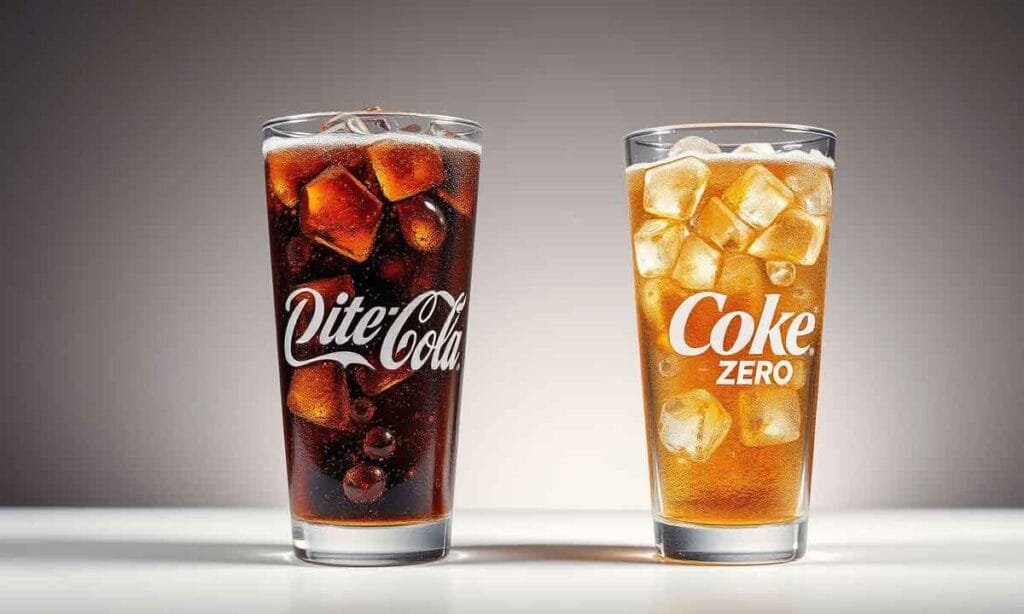
When it comes to taste, people are passionate about these two drinks. Diet Coke has a lighter, crisper flavor that feels clean and refreshing. Meanwhile, Coke Zero is richer and mimics the sweet, bold flavor of the original Coca-Cola. One might stand out as the winner depending on your preference—light and fizzy or sweet and daring.
But the big thing both drinks share is that sugar-free promise: zero calories, no sugar. It’s soda magic.
The Health Side of Diet Coke Ingredients vs. Coke Zero
While neither Diet Coke nor Coke Zero has sugar or calories, their ingredients have sparked some discussion regarding long-term health. Specifically, people zero in on their artificial sweeteners and caffeine content.
Artificial Sweeteners
Here’s the deal with sweeteners in both sodas:
- Aspartame (in both): Although it’s FDA-approved, some people report side effects like headaches or digestion issues. These issues seem to vary from person to person, though.
- Ace-K (in Coke Zero only): This sweetener works alongside aspartame, but it’s got its baggage. Animal studies have raised questions about its metabolic effects, although experts generally consider it safe in moderation.
Caffeine
Diet Coke has more caffeine (46 mg per can) than Coke Zero (34 mg per can). For caffeine-sensitive folks, that might not seem like a lot, but it can make a difference if you’re watching your intake.
Watch-Outs for Both Drinks
Aside from sweeteners and caffeine, here are a few other things to consider:
- Bone Health: Some studies suggest the phosphoric acid in sodas could be linked to lower bone density. This doesn’t mean an occasional Diet Coke or Coke Zero will harm your skeleton, but it’s worth considering.
- Dental Health: Even though they’re sugar-free, both drinks are acidic. Acid can weaken tooth enamel over time, so it’s another reason to enjoy them in moderation.
- Weight Effects: While calorie-free, some studies suggest artificial sweeteners might increase cravings for sweet stuff, potentially leading to overeating.
The bottom line? Neither of these drinks is likely to harm you if you enjoy them in reasonable amounts.
Coke Zero vs. Diet Coke for Weight Loss
Regarding weight loss, both options offer the same slim advantage—zero calories. ‘You’ll want to watch how artificial sweeteners affect your cravings. Some people find them helpful in reducing sugar consumption, while others feel they make controlling their appetite harder.
Head-to-Head Comparison
Here’s a quick ingredient comparison for easy reference:
| Ingredient | Diet Coke | Coke Zero |
|---|---|---|
| Carbonated Water | Yes | Yes |
| Aspartame | Yes | Yes |
| Acesulfame Potassium | No | Yes |
| Phosphoric Acid | Yes | Yes |
| Potassium Benzoate | Yes | No |
| Potassium Citrate | No | Yes |
| Natural Flavors | Yes | Yes |
| Caffeine | 46 mg per can | 34 mg per can |
What Should You Choose?
It all depends on your taste buds. If you’re looking for something close to the nostalgic flavor of Coca-Cola Classic, Coke Zero might be your BFF. But if you want a soda that’s a bit lighter and totally nails that crisp, refreshing vibe, Diet Coke is the way to go.
From a health perspective, neither is necessarily “better”.” Just enjoy them responsibly, and you’ll be good to go.
FAQs About Coke Zero and Diet Coke
1. What are the main ingredients in Diet Coke?
Diet Coke includes carbonated water, aspartame (a low-calorie sweetener), phosphoric acid, potassium benzoate (a preservative), natural flavors, and caffeine. These ingredients give Diet Coke a light, crisp taste from regular Coca-Cola.
2. How is Coke Zero’s formula different from Diet Coke’s?
The key difference lies in the sweeteners. While Diet Coke uses aspartame as its sole sweetener, Coke Zero combines aspartame with acesulfame potassium (Ace-K). This blend helps Coke Zero taste more like the original Coca-Cola.
3. Which soda has more caffeine, Diet Coke or Coke Zero?
Diet Coke has slightly more caffeine, 46 mg per 12 oz can. On the other hand, Coke Zero contains about 34 mg of caffeine per can. You might prefer Coke Zero’s lower levels if you’re sensitive to caffeine.
4. Does Diet Coke have the same taste as Coke Zero?
No, they taste pretty different. Diet Coke has a lighter, crispier flavor, while Coke Zero is designed to taste more like classic Coca-Cola. Taste preference often comes down to what you want.
5. Are Diet Coke and Coke Zero calorie-free?
Yes! Diet Coke and Coke Zero are sugar-free and calorie-free, making them popular for those seeking a low-calorie soda option.
6. Are artificial sweeteners in these drinks safe?
The FDA considers both aspartame (used in Diet Coke and Coke Zero) and acesulfame potassium (added to Coke Zero) safe for consumption in moderation. However, some people report sensitivity, such as headaches or digestive discomfort.
7. Which soda is better for weight loss?
Both are equally effective at limiting calorie intake since they have zero calories. However, individuals might find that artificial sweeteners in these sodas can either suppress or trigger cravings, so it varies by person.
8. What health concerns are linked to Diet Coke ingredients?
Some studies suggest excessive Diet Coke consumption of phosphoric acid could impact bone density. Like other sodas, Diet Coke’s acidity may contribute to enamel erosion, so moderation is key.
9. Is Coke Zero more acidic than Diet Coke?
Both drinks are similar in acidity, although Coke Zero includes potassium citrate, which helps balance the acidity for a smoother taste.
Why doesn’t Diet Coke taste like regular Coca-Cola?
Diet Coke was intentionally formulated with its taste profile. It’s lighter and less sweet than classic Coke. Coke Zero, however, was designed to mimic the flavor of the original Coca-Cola as closely as possible.
11. Can drinking Diet Coke or Coke Zero harm my teeth?
Both sodas are acidic, which means they can erode tooth enamel over time if consumed excessively. Using a straw, drinking water afterward, or limiting your intake can help protect your teeth.
12. What makes Coke Zero taste more like Coca-Cola Classic?
Coke Zero uses a recombinase and acesulfame potassium, which better simulates the full-bodied sweetness of regular Coca-Cola than Diet Coke’s single-use aspartame.
13. Which soda is better if I want a caffeine-free option?
Neither Diet Coke nor Coke Zero is caffeine-free. However, Coca-Cola offers caffeine-free versions of both drinks if you want to cut back. Be sure to check the label before purchasing.
14. Which drink is less likely to cause sugar cravings?
This varies from person to person. Some people find Diet Coke’s single-sweetener formula easier on cravings, while others prefer Coke Zero’s closer-to-sugar taste. The best way to know is by experimenting with both.
15. Is Coke Zero an improved version of Diet Coke?
Not exactly—they’re just different! Coke Zero was created for people who love the taste of Coca-Cola but want it without the sugar or calories. On the other hand, Diet Coke has a unique flavor profile, which many fans prefer.
16. Is there any nutritional value in these drinks?
Diet Coke and Coke Zero provide no essential nutrients since they are calorie-free and contain no sugar, fats, or protein. They’re purely indulgent beverages for those who love soda without the extra calories.
17. Which soda is better for someone watching their health?
It depends on your health priorities. Both drinks are sugar-free and calorie-free but contain artificial sweeteners and acidity, which might raise concerns for some people. Moderation is key when enjoying either option.
18. Are there preservatives in Coke Zero?
Unlike Diet Coke, Coke Zero does not use potassium benzoate as a preservative. Instead, potassium citrate in Coke Zero helps regulate its acidity and contributes to its smoother flavor.
19. Why does Coke Zero’s branding include “Zero Sugar”?
Coke Zero was rebranded as Coca-Cola Zero Sugar to clarify its zero-calorie, zero-sugar message. The new brand emphasizes that no sugar is used while maintaining a taste similar to classic Coca-Cola.
20. Which soda is more popular—Diet Coke or Coke Zero?
That’s a tough one! Diet Coke has been around longer and has a loyal fanbase, while Coke Zero appeals to those who want a taste closer to classic Coca-Cola. Popularity depends on personal preferences.
If you’re still unsure which one to choose, why not try both and see which fits your taste best? After all, the beauty of these two sugar-free options is that there’s something for everyone!
Final Thoughts
Coke Zero and Diet Cokhaveca e fanba, e—and it’s easy to see why. Both are solid, sugar-free options for soda lovers with different taste preferences. Hopefully, you now know which suits your style better, whether you’re team Diet Coke, team Coke Zero, or just happy to have the choice.